Some songs are built for a stage. Ya Baba is built for a wedding courtyard, a rooftop, a living room with the furniture pushed back — anywhere a whole family can dance to the same beat at once.
The story behind Ya Baba
Ya Baba began as a memory. Nora Fatehi has spoken about the song as a nod to her own childhood — a revival of the Tunisian folk classic "Sidi Mansour," the kind of tune that plays at family gatherings and never quite leaves you. Rather than let that memory fade, she and Shilpa Rao rebuilt it into something new: festive, layered, unmistakably a celebration.
That's the heart of it. Ya Baba isn't chasing a trend — it's honoring a root. The Arabic-Bollywood fusion feels natural because it comes from lived history, not a studio formula.
Where it comes from: a global revival
Released for World Music Day, Ya Baba is a standalone single — not tied to any film — sung by Nora Fatehi and Shilpa Rao, composed by Sanjoy, with lyrics by Nora Fatehi, Sanjoy, and Vayu. It folds Tunisian folk melody into Bollywood's festive dance-pop language, built to be danced by a crowd, not watched from a distance.
What the lyrics mean
"Ya baba — oh, dear one. Come, let's celebrate; let the night hold all of us at once."
"Ya baba" is a warm Arabic exclamation — something like "oh dear one" — the kind of phrase you'd call out to family across a crowded room. Here, it becomes the pulse of the whole song: an invitation, repeated, until everyone's arms are up.
Dancing Ya Baba
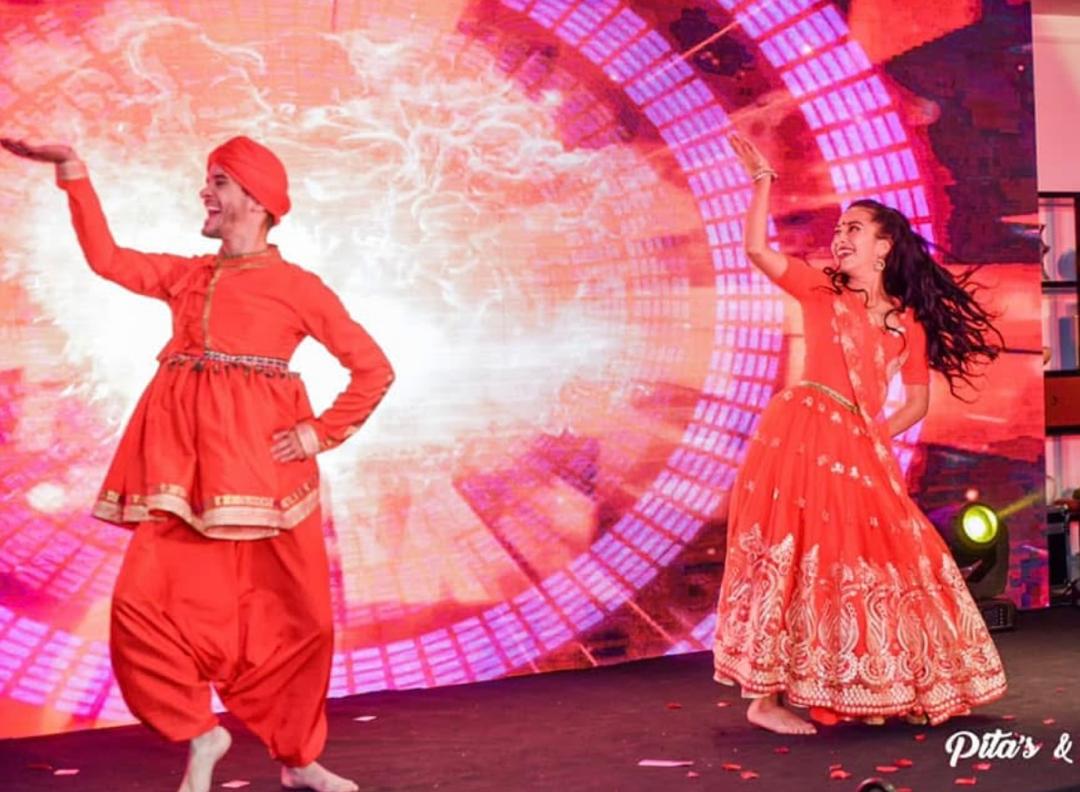
This is folk-rooted celebration dancing, built for groups. The steps repeat, the energy is communal, and there's no "wrong" way to be part of it — which makes it one of the friendliest songs in the whole library to start with.
What makes this dance special
Ya Baba teaches you that dancing doesn't have to be a solo performance to matter. The shoulders lift, the hands clap, the circle widens to pull in whoever's nearby. It's less about precision and more about presence — showing up, moving, being part of the celebration instead of watching it.
How you'll learn it inside the community
The Feel First
We find the pulse of the clap and the call — so the joy leads, not the counting.
Steps & Circle Work
The repeating folk steps, broken down slowly — no rush, no "right body."
Play & Expression
Then we open it up — the arms, the smile, the sense of celebration — and dance it full-out.
Because dance without feeling is just exercise — and you didn't fall in love with this song to do a workout.